Jubilee Childcare Centre
Curriculum
At Jubilee Childcare Centre we have developed a curriculum that fulfils our vision to foster a love for learning, equip children to live life skilfully and to create positive memories.
Our curriculum is designed to give every child the strongest possible start in life. We aim to build confident, independent, and curious learners who feel safe, valued, and ready for the next stage of their education. Our intent is to create a nurturing, language-rich environment where children develop secure relationships, explore through play, and learn the foundational knowledge and skills they need to thrive.
At Jubilee Childcare Centre, our practice is inspired by the Curiosity Approach. We value its focus on natural materials, open-ended exploration, and creating a calm, home-from-home environment. While many of our principles and provisions reflect this approach, we also maintain a flexible and balanced curriculum that allows us to include a wider range of resources to meet the interests and developmental needs of all children. This enables us to blend key elements of the Curiosity Approach with our own child-centred philosophy, creating an engaging and inclusive learning environment.
Intent
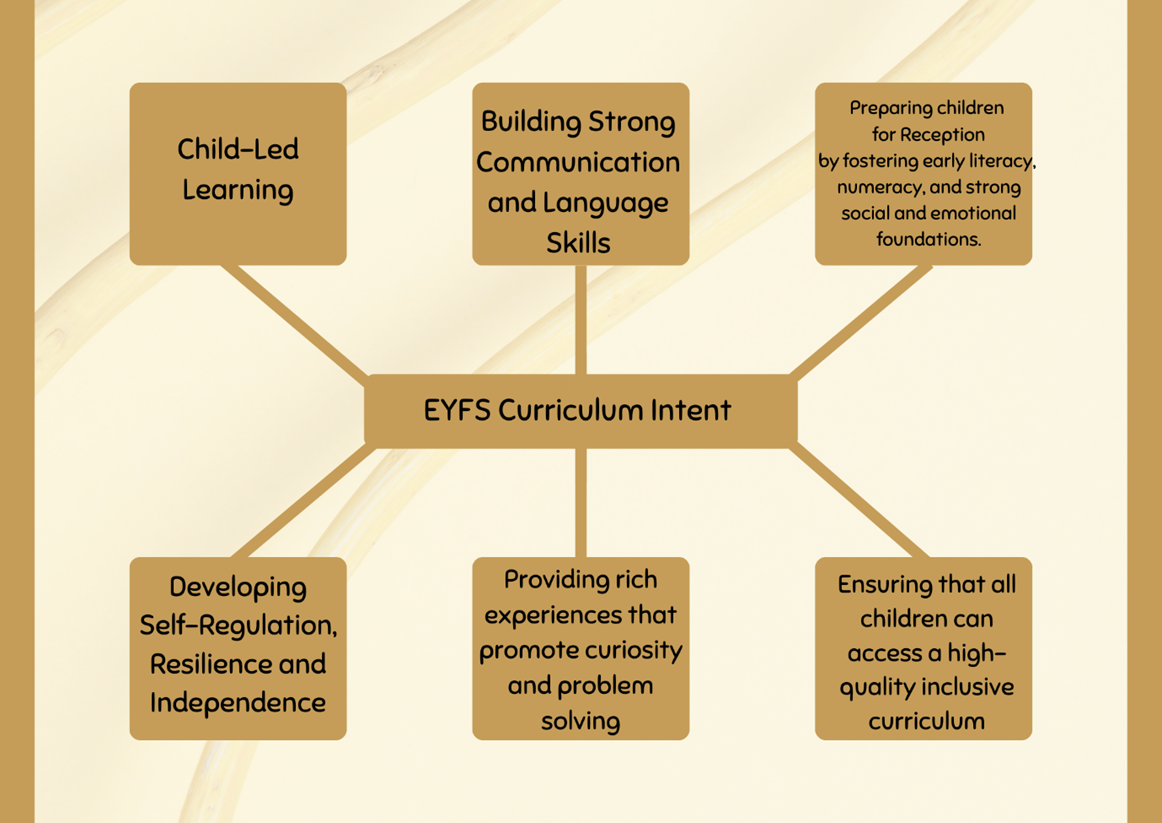
Our intent is to provide a warm, inclusive, and nurturing environment where every child aged 2–4 develops a love for learning and feels valued, safe, and confident. We aim to build strong communication and language skills, promote curiosity, independence, and resilience, and ensure children can follow their own interests through meaningful, child-led play. Our curriculum is ambitious and accessible for all children, including those with SEND and EAL, and is designed to foster early literacy, numeracy, and strong social and emotional foundations. We want every child to be equipped with the skills they need for life, prepared for their Reception year, and supported to create positive early memories that will stay with them as they grow.
Implementation
We implement our intent through a language-rich environment filled with stories, songs, high-quality interactions, and purposeful conversations. Practitioners carefully observe children to understand their interests and use these to shape learning opportunities that are hands-on, exploratory and child-led. Open-ended resources, problem-solving activities and real-life experiences encourage curiosity and critical thinking. Consistent routines, emotional coaching and opportunities for independence help children develop self-regulation and resilience. We adapt teaching and provision to meet the needs of all children, including personalised strategies for those with SEND and EAL, ensuring barriers to learning are removed. Early literacy and numeracy are embedded through play, meaningful contexts, and daily opportunities to mark-make, count, explore patterns and engage with books. Practitioners work closely with families to support learning both in the setting and at home.
Impact
As a result, children leave our nursery as confident, curious, and independent learners who are ready for the next stage of their education. They communicate effectively, express their ideas, and engage positively with others. Children demonstrate resilience, strong social and emotional skills, and the ability to manage their feelings and behaviour. They show early competence in literacy and numeracy through a growing interest in books, mark-making, counting, and exploring mathematical concepts. All children, including those with SEND and EAL, make good progress from their starting points and feel a strong sense of belonging. Above all, children develop a lifelong love of learning and take with them positive, joyful memories of their early years that help shape their confidence and aspiration for the future.
Our Main Focuses Include:
1.Building strong communication and language skills
We build strong communication and language skills by creating a language-rich environment where adults model clear, varied vocabulary and engage children in meaningful conversations throughout the day. Through high-quality interactions, storytelling, singing, questioning, and opportunities for imaginative play, children are encouraged to listen, take turns in conversation, and express their thoughts. Practitioners observe and respond to children’s interests, extend their language naturally, and ensure that every child—including those with SEND or EAL—has the support, encouragement, and exposure they need to develop confident communication skills.
2. Child-Led Learning
We encourage child-led learning by providing an enabling environment where children are free to explore, make choices, and follow their own interests. Practitioners observe children closely, tuning into their ideas and using these observations to extend learning through thoughtful questions, resources, and experiences. By valuing children’s curiosity, allowing time for deep engagement, and offering open-ended materials, we focus on empowering children to take ownership of their learning and develop independence, confidence, and creativity.
3. Developing Self-regulation, Resilience, and Independence
We aim for children to develop self-regulation, resilience, and independence by creating a calm, predictable environment where routines are consistent and emotions are acknowledged. Practitioners model positive behaviour, teach children strategies to manage their feelings, and provide opportunities for them to make choices and solve problems independently. Through encouragement, clear expectations, and time to practise new skills, children learn to persevere, bounce back from challenges, and gain confidence in managing tasks and emotions on their own.
4. Providing rich experiences that promote curiosity and problem-solving
We provide rich experiences that promote curiosity and problem-solving by offering open-ended resources, hands-on exploration, and opportunities for children to investigate and experiment. Practitioners create engaging environments that invite questions, encourage trial, and error, and allow children to think critically as they explore. By following children’s interests, offering challenges, and supporting them to find their own solutions, we nurture a love of discovery and build strong early problem-solving skills.
5. Ensuring all children, including those with SEND or EAL, can access a high-quality, inclusive curriculum
We can ensure that all children, including those with SEND and EAL, access a high-quality, inclusive curriculum by adapting teaching, resources, and environments to meet individual needs. Practitioners build strong relationships with families, use early identification and targeted support, and provide visual aids, modelling, and personalised strategies to help every child participate fully. By celebrating diversity, removing barriers to learning, and valuing each child’s strengths and experiences, nurseries create an inclusive environment where all children can thrive and make progress.
6. Preparing children for Reception by fostering early literacy, numeracy, and strong social and emotional foundations
We prepare children for Reception by fostering early literacy and numeracy skills through play-based, meaningful activities such as sharing stories, exploring mark-making, and following the Read, Write Inc scheme that will be transferable to them starting school.
We use mathematical language and engage children in counting and pattern games. We provide lots of opportunities for children to explore number throughout their day during various activities including cooking and exploring loose parts.
Practitioners also prioritise social and emotional development by supporting children to build friendships, manage their feelings, follow routines, and develop confidence and independence. Through consistent routines, rich learning experiences, and nurturing relationships, nurseries lay the strong foundations children need for a successful transition into school.